Q&A with Filmmaker Jeremy Lu, Writer-Director of Monkey Drum
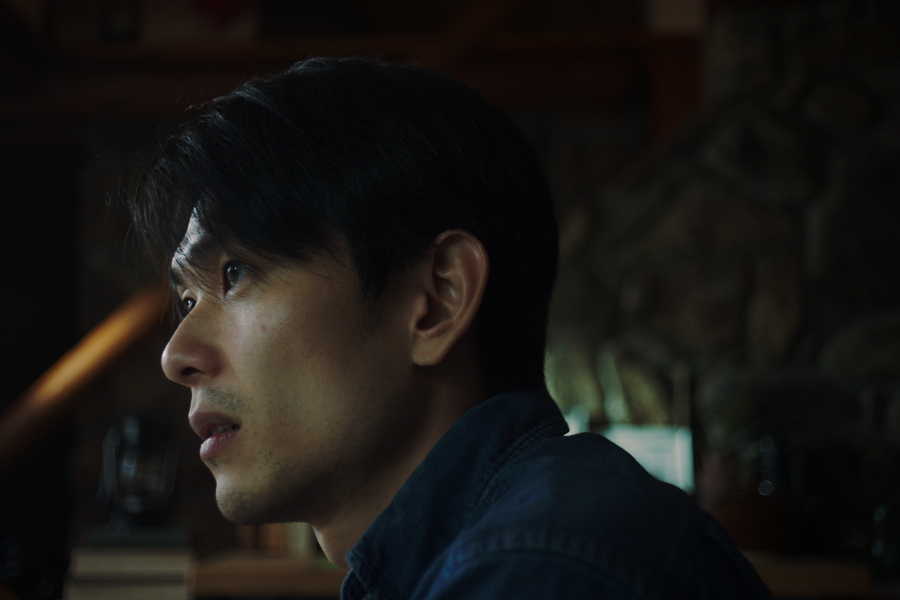
Monkey Drum • New York Premiere • BFF 2026
Jeremy Lu’s New York Premiere, "Monkey Drum", is a Horror/Drama set deep in rural Japan, where a reclusive elderly man takes in a starving father and son and sets a sinister chain of events in motion. In its compact 16-minute runtime, the film follows a cabin—and the people inside it—as grief, blame, and something more ancient begin to rot its interior world.
Raised in California and based in NYC, Japanese-Chinese-Filipino-American writer-director Lu approaches intimate stories through the intersections of his upbringing. In this conversation, he discusses the image that began the film, the risks of directing across language and generations, audience interpretation, and the value of staying present.
Tell us about the moment this film began for you.
Back at the end of 2024, I had this image I couldn’t shake of a flaming house that’s stuck below the soil with twisting roots and branches. The idea of a house, a family, and an ancient fate that has been recursively grown “from the Earth” quickly became incredibly intoxicating to me and before you know it, the first draft of "Monkey Drum" popped out.
What scene, character, image, or idea was the key that unlocked the film for you?
In tandem with the film’s release, we’re distributing a companion zine called ”All Alone in the Soil” about the film’s production and cultural influences which I had the privilege of working on with my documentarian friend Calvin Mumm. The phrase “all alone in the soil” has always acted as the “narrative anthem” for the film as I developed the script and concept over the course of several months.
So much of horror, and specifically the horror in this film, is rooted in isolation and for me, those five words encapsulate the worlds of the three characters in the film. As a filmmaker, I always feel the need to start in the world of abstraction before delving into specifics and that phrase was the exact abstract notion I used throughout development to propel the narrative forward.
Cosmic Crash Trailer
Why did this story feel important for you to tell now?
As a 22-year-old filmmaker, I’m at a very transitional period of my life where I’m torn between nostalgia for the past and anxiety about the future. It’s a quarter-life game of tug of war that has constantly ripped me away from the present. At the time I was writing the film, I was constantly struggling to reconcile my past, present, and future selves as all three made me unbelievably anxious in their own unique ways. ”Monkey Drum” is a horror film that attempts to put that exact anxiety on screen in a slow, sixteen-minute nosedive into a terrible nightmare.
What was the biggest creative challenge or risk you took in making the film?
Nothing about this movie felt safe to me. I’ve never directed three actors from three vastly different generations in a language that I’m maybe 5% comfortable in (shoutout our incredible translators and consultants Izumo Kawabe and Aya Troyer). I think directing begs a certain degree of masochism where you’re constantly putting yourself in incredibly difficult and uncomfortable situations in pursuit of the best creative headspace.
However, in a world of so many things that felt risky and challenging, the one thing that felt safe was the set itself—a direct result of the team and trust we were able to build. Our assistant director Anjali Moorthy has worked with me on my last three films and genuinely puts on a masterclass on running a safe and comfortable creative environment every single damn time.
Was there a point when you weren’t sure you would finish the film? What kept you going?
Monkey Drum was my NYU thesis film and my first foray into a professional directing environment that felt “high stakes.” We crowdfunded two thirds of our production budget from nearly a hundred donors so as the person at the steering wheel of the ship, I definitely felt the pressure to dock it in the right way.
I truly don’t think there was ever a moment where I felt uncertain that the film would be finished as my anxiety and the high-stakes nature of the project ended up being the perfect cocktail for a finished project. I also just find it incredibly difficult to write about something I don’t feel 100% invested and passionate about so a lot of my motivation also came from simply wanting to see the completed film as an audience member. Seeing a film to completion is a series of such immense miracles happening in tandem so I feel so grateful and proud that our team pulled this one off.
What surprised you most about the film as it evolved from the original idea to the finished work?
Monkey Drum was always designed to be a bit of a narrative puzzle in the way it ends on a question mark as opposed to the traditional period/exclamation point. However, over the past few months of shopping it around audiences, I’ve been consistently surprised by the sheer number of interpretations the film has garnered.
Every so often, I’ll have a conversation or receive a DM about an audience member’s interpretation of the film and every single time, I’m pleasantly surprised by how much it recontextualizes every decision I made while developing the story. The film is in the hands of the audience now and I’m surprised by how much I’ve enjoyed the changes in my relationship to the film.
What do you hope audiences take away from experiencing the film?
I’ve spent so much time describing this film to audiences and press as “an open letter to my future self.” If there’s one thing I want audiences to take away from their experience with Monkey Drum, it’s that the letter extends to their future selves as well.
While Monkey Drum deals with incredibly bleak and tragic concepts, I write from these places with immense optimism. This is a bizarre horror movie about a man and a house that are slowly rotting from the inside out. As the audience, you don’t have to be. And that’s exactly what I love about horror.
Is there a particular scene or moment you’re especially excited for audiences to experience at BFF?
I don’t want to say too much but there is one moment in particular that has elicited an audible gasp from every audience it’s screened for. I’m super excited to see what kind of gasp we get on October 8th!
Has showing the film to audiences changed the way you understand it? If so, how?
I touched on this earlier, but I love how ever-evolving my relationship to the film has been over the past couple of months. One of my greatest fears when I initially started the film’s festival run was the subject matter being too bleak or cold for audiences to resonate with some of the thematic threads I was trying to touch on.
However, the past few screenings have been filled with so many gasps and even laughter which I feel has simultaneously brought me closer to audiences and farther from the film—an incredibly liberating feeling as a filmmaker. Someone I showed an early cut of the film described the experience as “making them want to vomit in a good way,” which cracked me up for days. I didn’t know you could vomit in a good way. The more you know.
Is there anything about this film, its inspiration, production, or your own journey that you think audiences or journalists should know?
As an Asian American filmmaker who was raised through the lens of three very distinct cultures, I’ve grown very distant from the pressure to “choose” a culture to preach about to the audiences I make my films for. I’m a filmmaker who believes that Asian characters and creatives should exist in this industry without the need or expectation to speak on what it “means to be Asian.”
While Monkey Drum is a film that I truly do not believe could be told in any setting other than Japan, it’s not a film about what it means to “be Japanese.” The characters in Monkey Drum all fundamentally exist to echo themes that I believe could resonate with any audience. Existence is resistance—especially in today’s climate.
Based on your experience, what advice would you give to filmmakers just starting out?
Listen, I’m 22 years old and I barely have a handle on my life or identity as a filmmaker but that’s precisely what keeps ideas fresh and flexible in my head. I’m at the stage of life where I’m constantly trying to listen and learn which is so incredibly important when you’re starting to tell your first few stories.
I’m of the firm belief that there are always stories or characters trying to speak to us and whenever we think we “lack ideas,” something internally or externally is preventing us from listening to them. Don’t be afraid of writer’s block because in my brief experience, that’s always been when the story I’m afraid to write is screaming its loudest at me.
What are you working on or developing next?
The next thing I’m developing is a feature-length/proof of concept horror script called Sirena about a group of Filipino immigrant ice fishers on the snowy Washington-Canada border who face off against an existential threat at the bottom of a frozen lake. As a writer/director, I’m always looking for the narrative ties that exist between my films and ways to build upon them.
While Sirena builds upon a lot of the themes I tried to grapple with while developing Monkey Drum—the intimacy of family leading to catastrophe—it’s bigger, scarier, and significantly more intimate than my previous work. Really excited and hopeful to push that boulder up the hill soon!
What film, TV show, or other piece of storytelling did you see this year that you absolutely loved?
I got to watch an early screening of Filipiñana at Film Forum last week and I loved it! It’s a story of class divide in The Philippines told in cold, pitch-black comedy through the lens of country club culture. Rafael Manuel has such a singular voice and it’s such an incredible thing to see such singular voices rise to the forefront of Filipino cinema.
If you’ve been to Bushwick the neighborhood, what do you love most about it?
I’m actually currently based in the Bushwick neighborhood right now so I’m beyond honored to bring Monkey Drum to the community! In the brief year and a half I’ve lived in the area, I’ve absolutely loved the overwhelming sense of community through the people I’ve gotten to meet.
On the topic of community, one of my favorite rituals of my morning is saying hi to the owners of Cafe Pri on Wilson Avenue which is one of my favorite spots in the city for coffee and incredible Filipino food. Shoutout Cafe Pri and Filipino-run businesses in NYC!
What does “Make Time for Your Dreams” mean to you at this point in your creative life?
Especially in today’s culture of comparison, it’s easier than ever to confuse work ethic for obsession which ultimately blinds us from our dreams. When you spend every second obsessing over the futile chase of an amorphous “dream,” you forget to live in the present which is where those dreams often live.
I try (and fail then try again) to make time in my life to let myself enjoy the present separated from my past regrets and preemptive anxieties about a future that is unclear to me. In the small, ephemeral moments where I succeed, I make time for my dreams.
See Monkey Drum at BFF 2026
NEW YORK PREMIERE
Thursday • October 8, 2026 • 9:30 PM
There's Something Wrong
Williamsburg Cinemas
Deep in the rural Japanese countryside, a reclusive elderly man takes in a starving family, forcing a sinister chain of events that seems to rot the cabin from the inside out.
GET TICKETS → https://www.bushwickfilmfestival.com/tickets
The 19th Annual Bushwick Film Festival returns October 7–11, 2026, bringing filmmakers and audiences together for five days of independent film, conversation, and community across Brooklyn
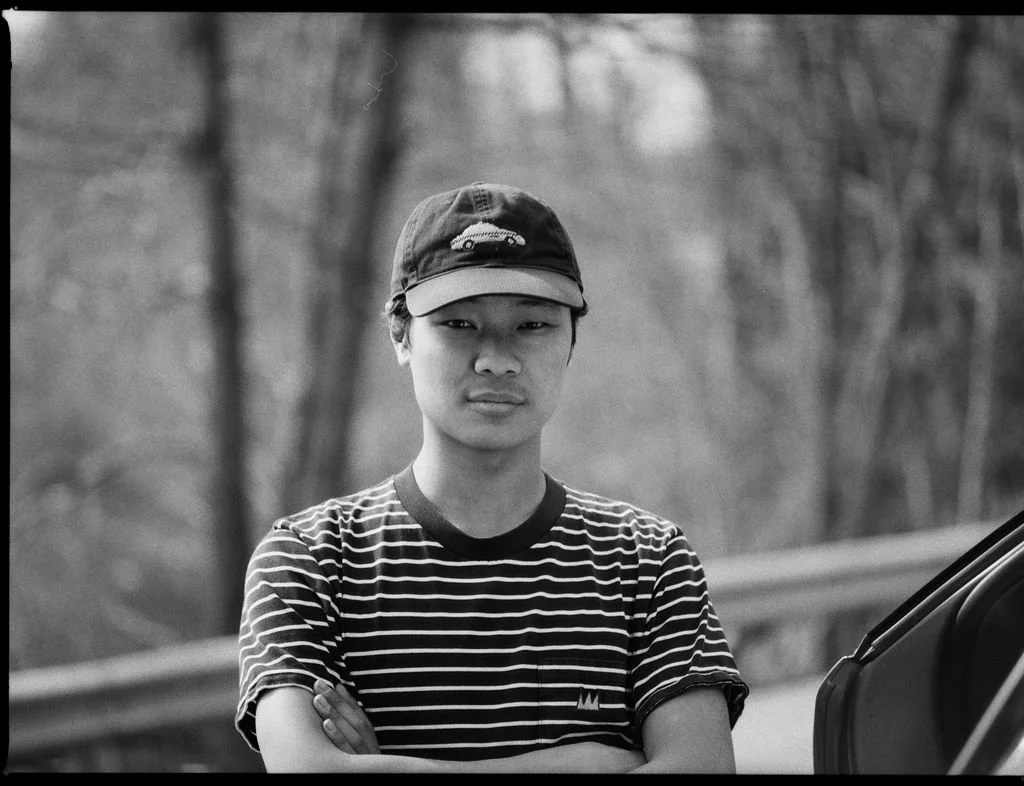
Raised in California and based in NYC, Jeremy Lu is a 22-year-old Japanese-Chinese-Filipino-American writer/director who seeks to make films that challenge him and the audiences he presents them to.
SEE IT AT BFF 2026
Monkey Drum
NEW YORK PREMIERE
Thursday, October 8
9:30 PM
There's Something Wrong
Williamsburg Cinemas
GET TICKETS
9:30 PM
There's Something Wrong
Williamsburg Cinemas
